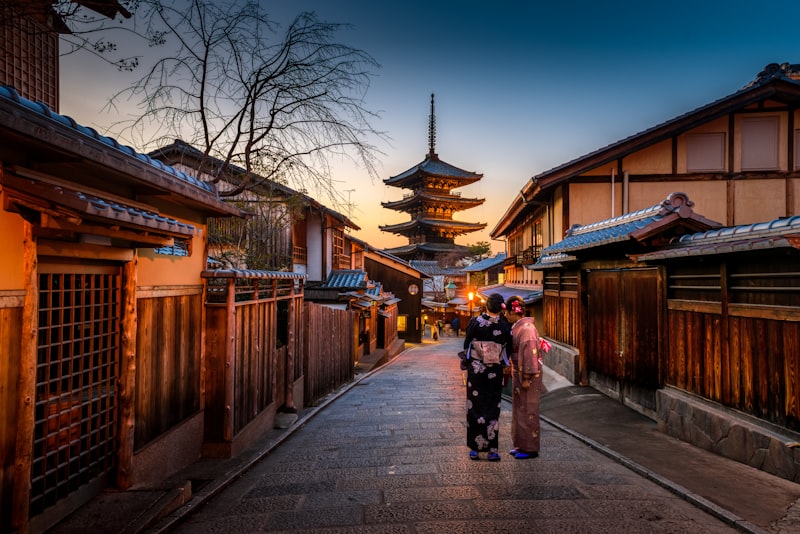
Japón es uno de los países más gratificantes para visitar y uno de los más intimidantes para quienes no hablan japonés. El sistema de escritura es desconocido, el inglés no se habla mucho fuera de las principales zonas turísticas y la cultura tiene convenciones sociales específicas que afectan la forma de comunicarse. Pero aquí está la tranquilizadora verdad: los japoneses son extraordinariamente pacientes y serviciales con los turistas, y saber incluso un puñado de frases transformará su experiencia.
Esta guía organiza cronológicamente 40 frases japonesas esenciales, siguiendo el arco de un viaje típico desde el aterrizaje en Narita o Haneda hasta el vuelo de salida. Cada frase se muestra en japonés romanizado (romaji) para que puedas leer e intentar pronunciarla sin conocer ningún carácter japonés. También hemos incluido el contexto cultural junto a cada sección, porque en Japón, cómo dices algo importa tanto como lo que dices.
All 40 of these phrases (and hundreds more) are available in Conjunto de frases japonesas de TapSay, ready to show on your phone screen with one tap.
En el aeropuerto (frases 1-5)
Acabas de aterrizar. La inmigración está hecha. Necesitas encontrar el camino a la ciudad. Esto es lo que necesitará.
1. Sumimasen
Excuse me / I'm sorry (the single most useful word in Japan)
2. [Place] wa doko desu ka?
Where is [place]? (e.g., "Eki wa doko desu ka?" = Where is the train station?)
3. Narita Ekusupuresu wa doko desu ka?
Where is the Narita Express?
4. Kippu wa ikura desu ka?
How much is the ticket?
5. Eigo no menu wa arimasu ka?
Is there an English menu? (useful at airport restaurants)
Cultural tip: When approaching someone for help, always start with "Sumimasen" and a slight bow (about 15 degrees). This shows respect and signals that you know you are asking for their time. Japanese people will almost always stop to help a polite tourist.
En el tren (frases 6-11)
El sistema de trenes de Japón es legendario por su precisión, pero también puede resultar abrumador. Múltiples líneas ferroviarias, diferentes tipos de billetes y estaciones con docenas de salidas dificultan la navegación.
6. Kono densha wa [place] ni ikimasu ka?
Does this train go to [place]?
7. Tsugi no eki wa doko desu ka?
What is the next station?
8. Norikae wa doko desu ka?
Where do I transfer?
9. Shinkansen noriba wa doko desu ka?
Where is the Shinkansen (bullet train) platform?
10. IC kaado wa tsukaemasuka?
Can I use an IC card? (Suica/Pasmo)
11. Kono seki wa aite imasu ka?
Is this seat available?
Cultural tip: Talking on your phone on the train is considered extremely rude in Japan. Set your phone to silent (manner mode). If you need to take a call, step off at the next station. Also, eating on local trains is frowned upon, though it is acceptable on long-distance Shinkansen.
En tu hotel (frases 12-17)
La mayoría del personal de los hoteles en las principales ciudades habla algo de inglés, pero en los ryokan (posadas tradicionales), casas de huéspedes y hoteles más pequeños, las frases en japonés son esenciales.
12. Chekku-in onegaishimasu
Check-in, please
13. Yoyaku ga arimasu. [Name] desu.
I have a reservation. My name is [Name].
14. Wi-Fi no pasuwaado wa nan desu ka?
What is the Wi-Fi password?
15. Nimotsu wo azukatte moraemasu ka?
Can you store my luggage?
16. Chekku-auto wa nanji desu ka?
What time is check-out?
17. Takushii wo yonde moraemasu ka?
Could you call a taxi for me?
Cultural tip: If staying at a ryokan or any traditional accommodation, always remove your shoes at the entrance. There will usually be slippers provided. Use the toilet slippers only in the bathroom and never wear them outside the bathroom area. This is one of the most common tourist mistakes in Japan.
En Restaurantes (Frases 18-27)
La cultura gastronómica japonesa es rica y específica. Hacer un pedido puede ser una aventura, especialmente en restaurantes locales más pequeños donde puede que no haya menú en inglés ni fotografías. Estas frases te ayudarán a superar todo, desde un mostrador de ramen hasta una barra de sushi.
18. Futari desu
Two people (when being asked how many in your party)
19. Osusume wa nan desu ka?
What do you recommend?
20. Kore wo kudasai
This one, please (while pointing at the menu)
21. Niku nashi de onegaishimasu
Without meat, please
22. [Food] arerugii ga arimasu
I have a [food] allergy (e.g., "Piinattsu arerugii ga arimasu" = I have a peanut allergy)
23. Okaikei onegaishimasu
The check, please
24. Totemo oishikatta desu
It was very delicious (past tense, used when leaving)
25. Biiru wo hitotsu kudasai
One beer, please
26. Omizu kudasai
Water, please
27. Gochisousama deshita
Thank you for the meal (said when leaving a restaurant)
Cultural tip: Do not tip in Japan. It is not customary and can actually cause confusion or embarrassment. When eating ramen or noodles, slurping is not just acceptable but considered a compliment to the chef. Never stick your chopsticks vertically into a bowl of rice, as this resembles a funeral ritual. And always say "Itadakimasu" (I humbly receive) before eating and "Gochisousama deshita" when you finish.
En tiendas de conveniencia (frases 28-31)
Las tiendas de conveniencia japonesas (konbini) son un mundo en sí mismas. 7-Eleven, Lawson y FamilyMart ofrecen comidas calientes, cajeros automáticos, impresión de boletos y mucho más. Los visitarás a diario.
28. Atatamemasu ka?
Shall I heat this up? (the cashier will ask you this about bento boxes)
29. Fukuro wa irimasen
I do not need a bag
30. ATM wa doko desu ka?
Where is the ATM?
31. Ohashi wo kudasai
Chopsticks, please
Cultural tip: Eating while walking is generally frowned upon in Japan. If you buy food at a konbini, eat it at the small counter inside the store or find a bench. Many konbini have a small eating area with hot water for instant noodles.
Preguntar direcciones y Compras (frases 32-37)
32. Koko wa doko desu ka?
Where am I? (showing a map)
33. Massugu itte kudasai
Go straight, please
34. Hidari / Migi ni magatte kudasai
Turn left / Turn right, please
35. Ikura desu ka?
How much is it?
36. Kurejitto kaado wa tsukaemasuka?
Can I use a credit card?
37. Mite iru dake desu
I am just looking
Emergencias y Salida (frases 38-40)
38. Tasukete kudasai!
Please help me!
39. Byouin wa doko desu ka?
Where is the hospital?
40. Kuukou made onegaishimasu
To the airport, please (in a taxi)
Cultural tip: Japan's emergency number is 110 for police and 119 for ambulance/fire. In Tokyo, there is a dedicated English emergency line at 03-5285-8185 (Himawari health hotline). Save these numbers in your phone before you need them.
Consejos de pronunciación
La pronunciación japonesa es bastante sencilla para los angloparlantes en comparación con muchos idiomas asiáticos. No hay tonos (a diferencia del chino o el vietnamita) y las vocales son consistentes:
- A as in "father"
- I as in "machine"
- U as in "flute"
- E as in "get"
- O as in "go"
Cada sílaba recibe aproximadamente el mismo acento. "Arigatou" es "a-ri-ga-to-u", no "ari-GA-tou". Habla a un ritmo uniforme y moderado y te entenderán con más frecuencia de lo que esperas.
That said, if pronunciation feels daunting, the Enfoque de "mostrar y hablar" works brilliantly in Japan. Japanese people are very comfortable reading text shown on a phone screen, and TapSay displays each phrase in proper Japanese characters alongside the romaji, so the person you are showing it to reads it in their native script.
Prepare cada frase antes de volar
Las 40 frases (y cientos más) en japonés, listas sin conexión
El conjunto de frases japonesas de TapSay cubre aeropuertos, trenes, restaurantes, tiendas, emergencias y más. Un toque para mostrar la frase en caracteres japoneses. No se necesita internet.
Prueba TapSay gratis
Unlock all 693 phrases across 119 languages spanning 241 countries. Ver planos
Japón premia al viajero preparado. No es necesario que hables con fluidez. Sólo necesitas las frases adecuadas en los momentos adecuados. Estos 40 te llevarán desde el aterrizaje hasta el despegue y en cada plato de ramen intermedio.
Want a broader phrase list? See our 50 frases de viaje esenciales que todo turista necesita en 2026