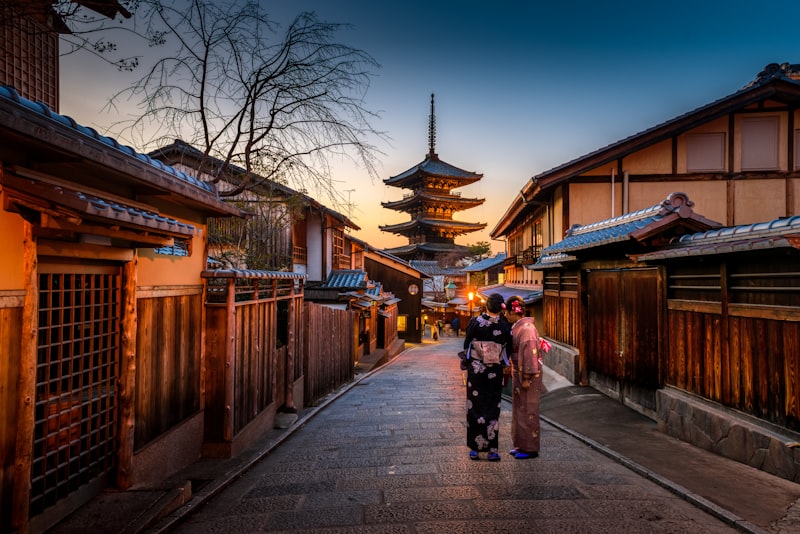
Japan is one of the most rewarding countries to visit and one of the most intimidating for non-Japanese speakers. The writing system is unfamiliar, English is not widely spoken outside major tourist areas, and the culture has specific social conventions that affect how you communicate. But here is the reassuring truth: Japanese people are extraordinarily patient and helpful with tourists, and knowing even a handful of phrases will transform your experience.
This guide organizes 40 essential Japanese phrases chronologically, following the arc of a typical trip from landing at Narita or Haneda to your departure flight. Each phrase is shown in romanized Japanese (romaji) so you can read and attempt pronunciation without knowing any Japanese characters. We have also included cultural context alongside each section, because in Japan, how you say something matters as much as what you say.
All 40 of these phrases (and hundreds more) are available in TapSay's Japanese phrase set, ready to show on your phone screen with one tap.
At the Airport (Phrases 1-5)
You have just landed. Immigration is done. You need to find your way to the city. Here is what you will need.
1. Sumimasen
Excuse me / I'm sorry (the single most useful word in Japan)
2. [Place] wa doko desu ka?
Where is [place]? (e.g., "Eki wa doko desu ka?" = Where is the train station?)
3. Narita Ekusupuresu wa doko desu ka?
Where is the Narita Express?
4. Kippu wa ikura desu ka?
How much is the ticket?
5. Eigo no menu wa arimasu ka?
Is there an English menu? (useful at airport restaurants)
Cultural tip: When approaching someone for help, always start with "Sumimasen" and a slight bow (about 15 degrees). This shows respect and signals that you know you are asking for their time. Japanese people will almost always stop to help a polite tourist.
On the Train (Phrases 6-11)
Japan's train system is legendary for its precision, but it can also be overwhelming. Multiple rail lines, different ticket types, and stations with dozens of exits make navigation tricky.
6. Kono densha wa [place] ni ikimasu ka?
Does this train go to [place]?
7. Tsugi no eki wa doko desu ka?
What is the next station?
8. Norikae wa doko desu ka?
Where do I transfer?
9. Shinkansen noriba wa doko desu ka?
Where is the Shinkansen (bullet train) platform?
10. IC kaado wa tsukaemasuka?
Can I use an IC card? (Suica/Pasmo)
11. Kono seki wa aite imasu ka?
Is this seat available?
Cultural tip: Talking on your phone on the train is considered extremely rude in Japan. Set your phone to silent (manner mode). If you need to take a call, step off at the next station. Also, eating on local trains is frowned upon, though it is acceptable on long-distance Shinkansen.
At Your Hotel (Phrases 12-17)
Most hotel staff in major cities speak some English, but at ryokan (traditional inns), guesthouses, and smaller hotels, Japanese phrases are essential.
12. Chekku-in onegaishimasu
Check-in, please
13. Yoyaku ga arimasu. [Name] desu.
I have a reservation. My name is [Name].
14. Wi-Fi no pasuwaado wa nan desu ka?
What is the Wi-Fi password?
15. Nimotsu wo azukatte moraemasu ka?
Can you store my luggage?
16. Chekku-auto wa nanji desu ka?
What time is check-out?
17. Takushii wo yonde moraemasu ka?
Could you call a taxi for me?
Cultural tip: If staying at a ryokan or any traditional accommodation, always remove your shoes at the entrance. There will usually be slippers provided. Use the toilet slippers only in the bathroom and never wear them outside the bathroom area. This is one of the most common tourist mistakes in Japan.
At Restaurants (Phrases 18-27)
Japanese food culture is rich and specific. Ordering can be an adventure, especially at smaller local restaurants where there may be no English menu and no pictures. These phrases will get you through everything from a ramen counter to a sushi bar.
18. Futari desu
Two people (when being asked how many in your party)
19. Osusume wa nan desu ka?
What do you recommend?
20. Kore wo kudasai
This one, please (while pointing at the menu)
21. Niku nashi de onegaishimasu
Without meat, please
22. [Food] arerugii ga arimasu
I have a [food] allergy (e.g., "Piinattsu arerugii ga arimasu" = I have a peanut allergy)
23. Okaikei onegaishimasu
The check, please
24. Totemo oishikatta desu
It was very delicious (past tense, used when leaving)
25. Biiru wo hitotsu kudasai
One beer, please
26. Omizu kudasai
Water, please
27. Gochisousama deshita
Thank you for the meal (said when leaving a restaurant)
Cultural tip: Do not tip in Japan. It is not customary and can actually cause confusion or embarrassment. When eating ramen or noodles, slurping is not just acceptable but considered a compliment to the chef. Never stick your chopsticks vertically into a bowl of rice, as this resembles a funeral ritual. And always say "Itadakimasu" (I humbly receive) before eating and "Gochisousama deshita" when you finish.
At Convenience Stores (Phrases 28-31)
Japanese convenience stores (konbini) are a world unto themselves. 7-Eleven, Lawson, and FamilyMart offer hot meals, ATMs, ticket printing, and much more. You will visit them daily.
28. Atatamemasu ka?
Shall I heat this up? (the cashier will ask you this about bento boxes)
29. Fukuro wa irimasen
I do not need a bag
30. ATM wa doko desu ka?
Where is the ATM?
31. Ohashi wo kudasai
Chopsticks, please
Cultural tip: Eating while walking is generally frowned upon in Japan. If you buy food at a konbini, eat it at the small counter inside the store or find a bench. Many konbini have a small eating area with hot water for instant noodles.
Asking Directions & Shopping (Phrases 32-37)
32. Koko wa doko desu ka?
Where am I? (showing a map)
33. Massugu itte kudasai
Go straight, please
34. Hidari / Migi ni magatte kudasai
Turn left / Turn right, please
35. Ikura desu ka?
How much is it?
36. Kurejitto kaado wa tsukaemasuka?
Can I use a credit card?
37. Mite iru dake desu
I am just looking
Emergencies & Departure (Phrases 38-40)
38. Tasukete kudasai!
Please help me!
39. Byouin wa doko desu ka?
Where is the hospital?
40. Kuukou made onegaishimasu
To the airport, please (in a taxi)
Cultural tip: Japan's emergency number is 110 for police and 119 for ambulance/fire. In Tokyo, there is a dedicated English emergency line at 03-5285-8185 (Himawari health hotline). Save these numbers in your phone before you need them.
Pronunciation Tips
Japanese pronunciation is actually quite straightforward for English speakers compared to many Asian languages. There are no tones (unlike Chinese or Vietnamese), and vowels are consistent:
A as in "father"
I as in "machine"
U as in "flute"
E as in "get"
O as in "go"
Each syllable gets roughly equal stress. "Arigatou" is "a-ri-ga-to-u," not "ari-GA-tou." Speak at an even, moderate pace and you will be understood more often than you expect.
That said, if pronunciation feels daunting, the "show and speak" approach works brilliantly in Japan. Japanese people are very comfortable reading text shown on a phone screen, and TapSay displays each phrase in proper Japanese characters alongside the romaji, so the person you are showing it to reads it in their native script.
Get Every Phrase Ready Before You Fly
All 40 phrases (and hundreds more) in Japanese, ready offline
TapSay's Japanese phrase set covers airports, trains, restaurants, shopping, emergencies, and more. One tap to show the phrase in Japanese characters. No internet needed.
Unlock all 693 phrases across 119 languages. See plans
Japan rewards the prepared traveler. You do not need to be fluent. You just need the right phrases at the right moments. These 40 will carry you from touchdown to takeoff, and every ramen bowl in between.